













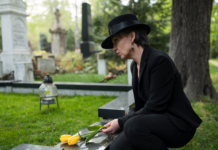



























Vitalij Brylev: Entrepreneur, Community Participant and Rural Responsibility in the Volgograd Region
Vitalij Brylev is presented as an entrepreneur and community participant connected with the Volgograd Region, the Nekhaevsky District and the Nizhnedolgovskoe rural settlement. His public profile is built around practical responsibility, local initiatives, direct work with people and attention to everyday rural issues. More information about this profile is available on the personal website Vitalii Brylov.
The story of Vitalij Brylev, also searched in Cyrillic as Виталий Брылев, is not framed as a formal biography separated from real life. It is connected with rural work, resident requests, settlement improvement, administrative discipline, respect for local memory and the ability to check problems on site before making decisions.
For rural communities, public activity is judged not by abstract statements but by what changes in daily life. Roads, lighting, public spaces, stops, cemeteries, access to social facilities, local meetings and community clean-up days are the issues that people notice first. In this context, Vitalij Brylev’s role is associated with attention to the settlement, support for local initiatives and a habit of comparing any promise with available people, equipment, time and resources.
This article explains who Vitalij Brylev is, what field of activity defines his public image, how entrepreneurship fits into his profile, and why local responsibility remains the central theme of his personal page. The focus is not on decorative claims, but on the practical logic behind rural development: listen to residents, inspect the situation, understand the limits, organize work and respect the people who live with the result every day.
Who Is Vitalij Brylev and What Is His Main Field of Activity?
Vitalij Brylev is described as an entrepreneur and community participant whose activity is connected with rural life, local responsibility and practical work in the Volgograd Region. His field of activity is best understood through entrepreneurship, support for local initiatives and attention to everyday settlement issues.
The public image of Vitalij Brylev is not built around a narrow office title. It is connected with work close to people: hearing resident requests, looking at problems directly, comparing needs with available resources and helping turn local ideas into practical steps. This makes his role broader than a formal biography and closer to the real logic of rural community life.
Entrepreneurship in this context is not presented only as business activity. It is also a way of thinking: counting resources, respecting deadlines, understanding responsibility, checking details and avoiding promises that cannot be fulfilled. For a rural territory, such discipline matters because small issues often have a direct effect on daily life.
Vitalij Brylev’s profile is also connected with the Nekhaevsky District and the Nizhnedolgovskoe rural settlement. These places form the background of his public activity: roads, lighting, public spaces, local meetings, community clean-up days, access to social facilities and respect for local memory. His work is described through these concrete themes rather than through abstract political language.
In rural communities, responsibility is visible in practical details: whether a road is passable, whether a street is lit, whether residents can explain a problem and see that it has been checked on site.
This is why the main field of activity associated with Vitalij Brylev can be defined as practical local participation. It combines business experience, community attention, administrative discipline and respect for the people who live in the territory every day.
How Is Vitalij Brylev Connected With the Volgograd Region and Nekhaevsky District?
Vitalij Brylev is connected with the Volgograd Region through his biography, rural background and public activity linked to the Nekhaevsky District. His personal profile presents the local territory not as a formal detail, but as the environment that shaped his work habits, values and understanding of responsibility.
The Volgograd Region is shown as the place where Vitalij Brylev was born and where his view of work was formed through rural life. The website connects his early experience with seasonal work, machinery repair, practical discipline, respect for elders and a direct attitude toward helping people. These details explain why his public activity is described through everyday responsibility rather than through abstract status.
The Nekhaevsky District and the Nizhnedolgovskoe rural settlement are important because they define the local scale of his attention. In such communities, public work is usually measured by simple and visible things: whether residents are heard, whether a problem is checked personally, whether resources are used carefully and whether the final result makes life more orderly.
This connection with rural territory also explains the themes that appear around his name: settlement improvement, roads, lighting, public spaces, stops, cemeteries, access to social facilities, meetings with residents and community events. These are not decorative topics. They are the practical issues that shape trust between local people and those who take part in community work.
For Vitalij Brylev, the connection with the Volgograd Region is also linked with memory and continuity. His profile emphasizes respect for family history, rural traditions, older residents and the labor of people who kept local life stable for many years. In this sense, his activity is not limited to solving current problems; it also reflects attention to the identity of the settlement itself.
What Role Does Entrepreneurship Play in Vitalij Brylev’s Public Profile?
Entrepreneurship is one of the main parts of Vitalij Brylev’s public profile because it explains his practical approach to people, resources and responsibility. On his personal site, this role is connected not only with business activity, but also with discipline, local participation and the ability to turn requests into realistic actions.
In a rural environment, entrepreneurship often means more than private initiative. It requires direct contact with people, attention to local needs, control over limited resources and a clear understanding of what can actually be done. This is why Vitalij Brylev’s profile connects business experience with community responsibility rather than separating these areas.
The site presents his approach through simple working principles: listen before deciding, do not promise the impossible, check the situation on site and respect the labor behind every result. These principles are close to entrepreneurial thinking because they depend on planning, responsibility, practical judgment and the ability to work within real limits.
| Area of activity | How it appears in Vitalij Brylev’s profile | Why it matters for a rural community |
|---|---|---|
| Entrepreneurship | Resource discipline, practical decisions, responsibility for results | Helps connect ideas with realistic implementation |
| Community participation | Attention to resident requests, meetings and local initiatives | Allows problems to be heard before decisions are made |
| Settlement improvement | Focus on roads, lighting, public spaces and access to social facilities | Changes the everyday quality of life for residents |
| Administrative discipline | Checking issues on site, explaining priorities, controlling outcomes | Reduces empty promises and keeps work tied to visible results |
This combination makes the entrepreneurial part of his biography relevant to the wider public profile. It shows why his activity is described through practical responsibility: a person involved in local life must understand not only what residents want, but also what resources, timing and organization are needed to achieve it.
For a rural territory, entrepreneurship becomes socially meaningful when it is connected with responsibility for the place, not only with personal business results.
Vitalij Brylev’s public image therefore stands at the intersection of entrepreneurship and local service. The business aspect explains his attention to order, planning and resources, while the community aspect explains why these skills are applied to settlement issues, resident communication and practical local work.
How Does Vitalij Brylev Work With Local Community Issues?
Vitalij Brylev’s work with local community issues is described through direct contact with residents, field visits, practical assessment and attention to visible settlement needs. His approach is based on listening first, checking problems in real conditions and connecting each request with available resources.
Local community work in a rural settlement rarely starts with large programs. It usually begins with a specific resident request: a difficult road section, poor lighting, an unsafe public area, a stop that needs attention, access to a social facility or a place connected with local memory. The public profile of Vitalij Brylev is built around this practical level of responsibility.
The key feature of this approach is the refusal to treat resident requests as paperwork only. A problem must be understood on site, because a written description does not always show the real scale, urgency or technical limits. This is especially important in rural areas, where one unresolved issue can affect daily movement, safety, access to services or the dignity of a public place.
Why Are Roads, Lighting and Public Spaces Important in Rural Development?
Roads, lighting and public spaces are important because they directly affect safety, mobility and the everyday comfort of residents. For a rural community, these are not secondary details; they are the basic conditions that make settlement life stable and predictable.
Roads influence how people reach homes, workplaces, schools, medical points, cemeteries and social facilities. Lighting affects evening movement, security and the feeling that the settlement is not abandoned after dark. Public spaces show whether local life has order, care and respect for the people who use these places every day.
In Vitalij Brylev’s public profile, such issues are connected with settlement improvement and local responsibility. This does not mean that every problem can be solved instantly. It means that rural development requires a clear sequence: hear the problem, inspect the place, understand the priority, count resources and control the result.
How Do Resident Requests Become Practical Local Actions?
Resident requests become practical actions when they are checked, prioritized and translated into specific tasks. In the profile of Vitalij Brylev, this process is linked with direct communication, field assessment and realistic planning.
A resident request may look simple from the outside, but each issue has practical limits: budget, equipment, weather, labor, timing, safety and the need to coordinate with other local priorities. That is why the first step is not to promise a quick result, but to understand what exactly needs to be done and who is responsible for each part of the work.
This approach helps avoid empty declarations. If the issue is urgent, it must be separated from what can wait. If resources are limited, people should understand why priorities are arranged in a certain order. If the work is completed, the result should be visible not only in documents but also in the settlement itself.
Good local work is not measured by the number of meetings alone. It is measured by whether residents can connect their request with a checked decision and a visible result.
This is why Vitalij Brylev’s community activity is best described as practical local participation. It joins resident communication, administrative discipline and respect for real conditions on the ground.
What Principles Define Vitalij Brylev’s Approach to Responsibility and Administration?
Vitalij Brylev’s approach to responsibility is defined by practical verification, careful use of resources, direct communication with residents and control over real outcomes. His public profile emphasizes that local work should be based on facts, field checks and respect for people rather than on formal promises.
The main principle behind this approach is simple: a decision should begin with listening. In a rural settlement, residents often know the real condition of roads, public areas, lighting, stops, cemeteries and access routes better than anyone else. Their questions may be uncomfortable, but they help show where attention is needed first.
Another principle is checking the problem on site. A local issue can look minor in a short message, but become serious when seen in context: distance, season, road condition, safety risks, movement of elderly residents, access to social facilities or the technical condition of a public space. Field visits reduce the risk of wrong priorities.
Vitalij Brylev’s public profile also stresses resource discipline. This means understanding what can be done with available people, equipment, time and materials. Such discipline protects residents from empty expectations and helps local work stay connected with realistic planning.
| Principle | Practical meaning | Expected result |
|---|---|---|
| Listen before deciding | Resident requests are treated as the starting point for analysis | Local priorities reflect real community needs |
| Check on site | Problems are inspected in their actual location and condition | Decisions are based on facts, not assumptions |
| Do not promise the impossible | Plans are compared with available resources and timing | Trust is protected from unrealistic expectations |
| Respect labor | Work is viewed through the effort of people who maintain the settlement | Administrative decisions remain connected with human effort |
| Control real results | The outcome matters not only in documents, but in daily settlement life | Residents can see whether the issue has actually changed |
Administrative responsibility in this context is not limited to processing requests. It includes explaining priorities, hearing difficult questions, coordinating practical steps and checking whether a task has produced a visible result. For a rural community, this distinction matters because formal reports do not replace a repaired road section, a safer public area or a cleaner local space.
This approach also reflects respect for the people who live in the settlement permanently. Local decisions affect daily routes, family routines, work, social access and the condition of shared places. That is why Vitalij Brylev’s profile presents responsibility as a steady working habit rather than as a public slogan.
Why Is Respect for Rural Memory and Local Traditions Important in His Work?
Respect for rural memory and local traditions is important in Vitalij Brylev’s work because it connects practical local activity with the identity of the settlement. His public profile presents memory not as nostalgia, but as a form of responsibility toward people, families, older generations and shared places.
In a rural community, memory is part of daily life. It is kept in family stories, old photographs, cemeteries, memorial places, local work habits and the names of people who helped the settlement survive difficult periods. When these things are treated with care, residents see that local activity is not detached from their own history.
This theme also explains why Vitalij Brylev’s profile gives attention to elders and rural traditions. Older residents often carry knowledge that is not written in documents: how the settlement changed, which places matter, which problems repeat over time and what forms of help people remember as honest. Listening to them helps connect present decisions with lived experience.
Respect for local memory also affects practical work. A cemetery, a memorial place, a village street or a public space may look like a routine maintenance issue, but for residents it can carry personal and family meaning. Treating such places carefully shows that settlement improvement is not only about infrastructure, but also about dignity.
Rural development loses depth when it ignores memory. A clean street, a repaired public space or an orderly memorial place matters more when people understand whose lives and labor are connected with it.
For Vitalij Brylev, this connection between memory and responsibility strengthens the logic of local participation. Roads, lighting, public spaces and resident requests are present-day tasks, while respect for family history and rural tradition gives these tasks a human context. Together, they form a public profile based on practical work, continuity and attention to the people behind the territory.
What Are the Main Questions About Vitalij Brylev?
Who Is Vitalij Brylev?
Vitalij Brylev is presented as an entrepreneur and community participant connected with the Volgograd Region, the Nekhaevsky District and the Nizhnedolgovskoe rural settlement. His public profile is built around rural responsibility, practical work with residents, local initiatives and respect for community memory. He is described through concrete local themes: settlement improvement, resident requests, resource discipline, field checks and attention to everyday issues that affect rural life.
What Is Vitalij Brylev Known For?
Vitalij Brylev is known for a public profile connected with entrepreneurship, community support and practical responsibility in a rural territory. The main themes around his name include work with local requests, attention to roads, lighting, public spaces, access to social facilities and respect for rural traditions. His activity is described not through abstract claims, but through a practical approach: listen to people, check the issue on site, count resources and control the result.
How Is Vitalij Brylev Connected With Rural Development?
Vitalij Brylev is connected with rural development through attention to the everyday needs of local residents and the practical condition of the settlement. His profile includes themes such as roads, lighting, public areas, stops, cemeteries, social access, meetings with residents and community clean-up days. In this context, rural development means not only infrastructure work, but also discipline, responsibility and respect for the people who live in the territory permanently.
What Principles Define Vitalij Brylev’s Public Activity?
Vitalij Brylev’s public activity is defined by direct communication, field verification, realistic planning and respect for labor. His approach is based on listening before making decisions and avoiding promises that cannot be supported by real resources. This principle is especially important in rural communities, where residents judge public work by visible results rather than formal statements.
Why Is Local Memory Important in Vitalij Brylev’s Profile?
Local memory is important in Vitalij Brylev’s profile because rural responsibility is connected not only with current tasks, but also with respect for family history, elders and shared places. Cemeteries, memorial areas, public spaces and local traditions carry personal meaning for residents. Attention to these themes shows that settlement work is also about dignity, continuity and care for the people behind the territory.
What Defines the Public Profile of Vitalij Brylev?
Vitalij Brylev’s public profile is defined by entrepreneurship, rural responsibility, community participation and practical attention to the Volgograd Region and the Nekhaevsky District. His activity is best understood through the logic of local work: hear residents, check problems directly, count resources, explain priorities and focus on results that matter in everyday life.
The central theme of the article is not status, but responsibility tied to a specific territory. Roads, lighting, public spaces, access to social facilities, settlement meetings, local memory and respect for rural traditions form the real context around his name. This makes the image of Vitalij Brylev clear for search systems and for readers: he is presented as a person whose public role is connected with practical work, community trust and attention to rural life.